- Label it: TikTok rejects or restricts AI ads it finds without disclosure.
- Specs: 9:16, export at 1080x1920, and 21 to 34 seconds performs best.
- Hook in the first 3 seconds and show the product in use within 2.
- Test 3 to 5 creatives per ad group and refresh every 2 to 4 weeks.
- EchoUGC turns one line into a finished, captioned TikTok ad for about $9 to $12.
Can you run AI UGC on TikTok? Yes, with the label
AI UGC TikTok ads are allowed. TikTok's advertising policy says AI-generated content can run if you "apply the AIGC label" or add "a clear disclaimer, caption, watermark, or sticker of your own." The next line is the one that matters: "If we identify AI-generated content that has not been disclosed, your ad will be rejected or restricted."
TikTok is not neutral about AI presenters either. It offers them. In June 2024 it launched Symphony Digital Avatars, including stock avatars described as "pre-built avatars created using paid actors that are licensed for commercial use." When the platform itself offers AI actors to advertisers, the real question is not whether AI UGC is allowed. It is whether yours is labeled, honest and good enough to stop the scroll.
That last part is where most AI ads fail. A selfie-style AI actor still has to hook in seconds, explain one product clearly and make one ask. New to the format? Start with what AI UGC is, then come back for the TikTok specifics.
Sources: TikTok Ads Policy: Misleading and false content, TikTok Newsroom: Symphony Avatars
TikTok's AIGC disclosure rule for ads, explained
TikTok separates significant AI use, which must be disclosed, from minor AI edits, which do not need a label.
| Type of AI use | Example | Label needed? |
|---|---|---|
| Fully AI-generated video or audio | An AI actor presenting your product | Yes |
| AI voice cloning | Making someone say something they did not say | Yes |
| AI-altered action | Showing someone doing something they did not do | Yes |
| Minor enhancement | Lighting, brightness or color tweaks | No |
| Minor enhancement | Removing or changing a background | No |
An AI UGC Ad with an AI actor is significant AI use every time, so plan on labeling every one.
Where the label appears
In TikTok Ads Manager, AI-generated, synthetic or manipulated media is a mandatory disclaimer category. TikTok says the label "will show at the bottom of the in-feed video for the duration of the ad." It sits below the video, so it does not cover your hook or captions.
Spark Ads vs non-Spark Ads
The disclaimer works on both. TikTok says you can run ads with disclaimers as Spark Ads or non-Spark Ads. Spark Ads promote an organic post, and organic posts also fall under TikTok's community guidelines, which "require creators to label AI-generated or significantly edited content that shows realistic-looking scenes or people." For brand-made AI UGC, a non-Spark ad uploaded straight to Ads Manager is the simpler path. For every platform's rules in one place, see our guide to AI ad disclosure labels.
Sources: TikTok Ads Policy, TikTok: About ad disclaimers, TikTok Community Guidelines: Integrity and Authenticity
Specs: 9:16, 1080x1920, 21 to 34 seconds
| Spec | What TikTok says |
|---|---|
| Aspect ratio | Vertical 9:16 |
| Resolution | Shoot in HD, export at 1080x1920 or higher |
| Length | Up to 60 seconds, but 21 to 34 seconds performs best |
| On-screen text | 5 to 10 words per second |
| Style | DIY, not overly polished, so it blends with user content |
The style line is the one AI users ignore most. TikTok tells advertisers to "go for a DIY or not overly polished style so that it fits in with the user-generated content on TikTok." A selfie-style actor on a sofa beats a glossy studio render. Our guide to realistic AI UGC covers the details.
EchoUGC already matches these specs: every video exports in 1080p at 9:16 with captions burned in, and the base 100-credit video covers up to 45 seconds, so TikTok's 21 to 34 second sweet spot costs a single render.
Sources: TikTok: Creative best practices, TikTok Video Advertising Guide
Hooks: the first 3 seconds and the 6-second rule
TikTok gives three timing rules, and they stack:
- "Introduce your content proposition in the first 3 seconds."
- "Prioritize your hook in the first 6 seconds."
- "Show the product in use within the first two seconds."
In practice, your first spoken line is the hook and your first frame shows the product. Here is what that looks like in a short Talking ad:
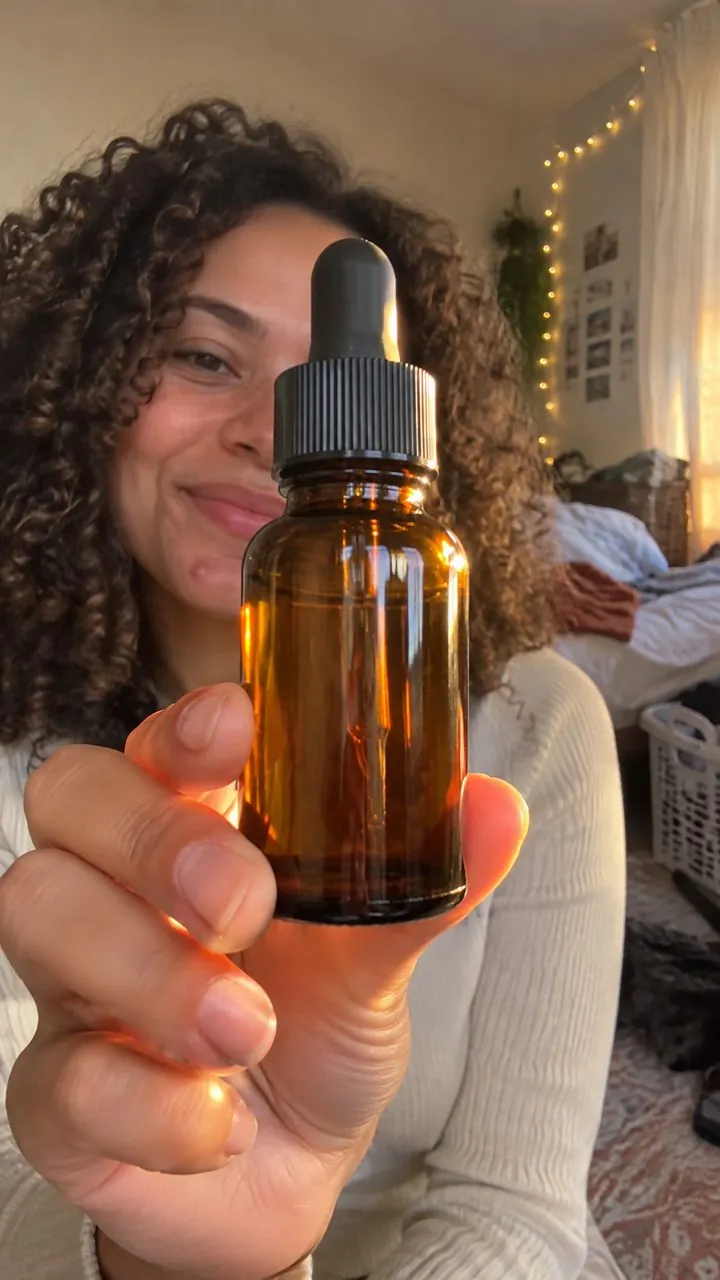
Hook: (holding the bottle up to the camera) "This is why you can skip the smoothie shop."
Body: "It's the [Brand] travel blender. It fits in a gym bag, charges with a phone cable, and rinses out in the sink. Frozen fruit, protein, done before your coffee's ready."
CTA: "Tap the link and grab the color you'd actually carry."
Notice what is missing: no logo intro, no slow build, no "hey guys." For 40 more opening lines sorted by angle, see UGC Ad hooks.
Sources: TikTok: Creative best practices, TikTok Video Advertising Guide
Ad group setup: 3 to 5 creatives, 3 to 5 ad groups
TikTok suggests "between 3-5 different creatives per ad group and 3-5 diversified ad groups per campaign." That is 9 to 25 creatives for one well-built campaign. On budget, its video ad guide says to test variations at a modest $20 to $30 a day, notes that campaigns need at least $50 a day, and advises putting 20 to 30% of your monthly budget into testing new variations.
Creative volume is where human UGC gets expensive. Here is the math using Influee's median creator price of about $175 a video:
| Creatives | Human creators (about $175 each) | EchoUGC ($9 to $12 each) |
|---|---|---|
| 9 (minimum setup) | About $1,575 | About $81 to $108 |
| 15 | About $2,625 | About $135 to $180 |
| 25 (full setup) | About $4,375 | About $225 to $300 |
Creator figures use Influee's median before bundle discounts, usage rights or whitelisting fees. See UGC creator rates for the full breakdown and how many ad creatives to test for structure.
Sources: TikTok: Creative best practices, TikTok Video Advertising Guide, Influee: UGC price 2026
What gets AI ads rejected on TikTok
Most AI UGC rejections come from a short list of avoidable mistakes:
- No AI disclosure. Undisclosed AI content is rejected or restricted under TikTok's policy. Turn on the AI-generated disclaimer every time.
- A public figure's face or voice. TikTok prohibits misusing "the likeness (audio or visual) of a public figure without their permission," including false endorsements. No celebrity lookalikes, no famous voice clones.
- Fake testimonials. In the US, the FTC's rule bans testimonials that misrepresent that they are by someone who does not exist. The FTC also says the rule has no blanket ban on AI avatars, so the line is a fake or false testimonial, not the avatar itself.
- Claims you cannot back up. TikTok's policy covers misleading and false content, AI or not. Say what the product does, not what it might do.
General information, not legal advice. For the full picture, read is AI UGC legal.
Sources: TikTok Ads Policy, FTC final rule on fake reviews, FTC rule Q&A
Refresh cadence and fatigue signals
TikTok's video ad guide says to "refresh creatives every 2-4 weeks, or sooner if results drop." Its creative best practices add a trigger: refresh "when delivery results exhibit a consistently declining trend," and add the new creatives to the existing ad group instead of starting from zero.
Put those together and a single campaign with 3 to 5 creatives per ad group needs a steady stream of new ads every month. Watch for these signs that an ad is wearing out:
- Click-through rate sliding for several days in a row.
- Cost per result rising while targeting and budget stay the same.
- Delivery dropping even though nothing in the ad group changed.
On TikTok, creative is a subscription, not a one-time purchase.
This is exactly why per-video cost matters. Replacing five tired ads with creators can run hundreds of dollars and a week of back and forth. In EchoUGC it is five one-line briefs and an afternoon.
Sources: TikTok Video Advertising Guide, TikTok: Creative best practices
Make TikTok AI UGC Ads in EchoUGC
EchoUGC is built for exactly this job: one line in, a finished TikTok-ready ad out, usually in minutes.
- Describe your product. One line is enough. Add a product photo if you want a Demo or Unboxing ad; it is placed in every scene.
- Pick a format or angle. Talking for hooks and stories, Demo to show it in use, Unboxing for a first-impressions open. Or start from an idea starter: problem and fix, myth-busting, objection, contrarian, reveal or "3 reasons."
- Cast your actor. Choose from the AI actor library, let EchoUGC auto-pick, pick one of your saved actors, or upload your own actor photo with that person's permission.
- Set length and energy. Pick 30 seconds, which sits inside TikTok's 21 to 34 second range, natural or lively movement, and captions on.
- Download and upload. Export the 1080p 9:16 video, upload it to TikTok Ads Manager and switch on the AI-generated disclaimer.
- Write the next brief. Each brief makes one finished video, so write another brief for every hook you want in the ad group.
Failed renders and quality-check rejections refund your credits automatically, and unused credits roll over. Try it for $11, or compare plans.
Frequently asked questions
Does TikTok allow AI-generated ads?
Yes. TikTok's ad policy allows AI-generated content if you apply the AIGC label or add your own clear disclaimer, caption, watermark or sticker. If TikTok finds AI content that was not disclosed, the ad is rejected or restricted.
How do I label AI content in TikTok Ads Manager?
Use the ad disclaimer option in TikTok Ads Manager and choose the AI-generated content category. The label shows at the bottom of the in-feed video for the whole ad and works on Spark and non-Spark ads. TikTok says to contact your sales representative if you do not see the option.
What is the best length for a TikTok ad?
TikTok's video advertising guide says ads can run up to 60 seconds but 21 to 34 seconds performs best. Hook viewers in the first 3 seconds and show the product in use within the first 2.
Will TikTok reject my AI UGC Ad?
It can if the AI content is not disclosed, if it uses a public figure's face or voice without permission, or if it makes misleading claims. A labeled, honest AI UGC Ad with your own product is allowed.
Does TikTok have its own AI avatars?
Yes. TikTok launched Symphony Digital Avatars in June 2024. Its stock avatars are pre-built avatars created using paid actors licensed for commercial use.
Make your first AI UGC Ad for $11
Describe your product in one line. EchoUGC writes the script, casts an AI actor and delivers a captioned 9:16 video, sized for TikTok, Reels and Shorts. The $11 first week gives you 100 credits, enough for one finished video, then continues on Starter at $49 a month after 7 days. Cancel anytime from your account.
Start creating